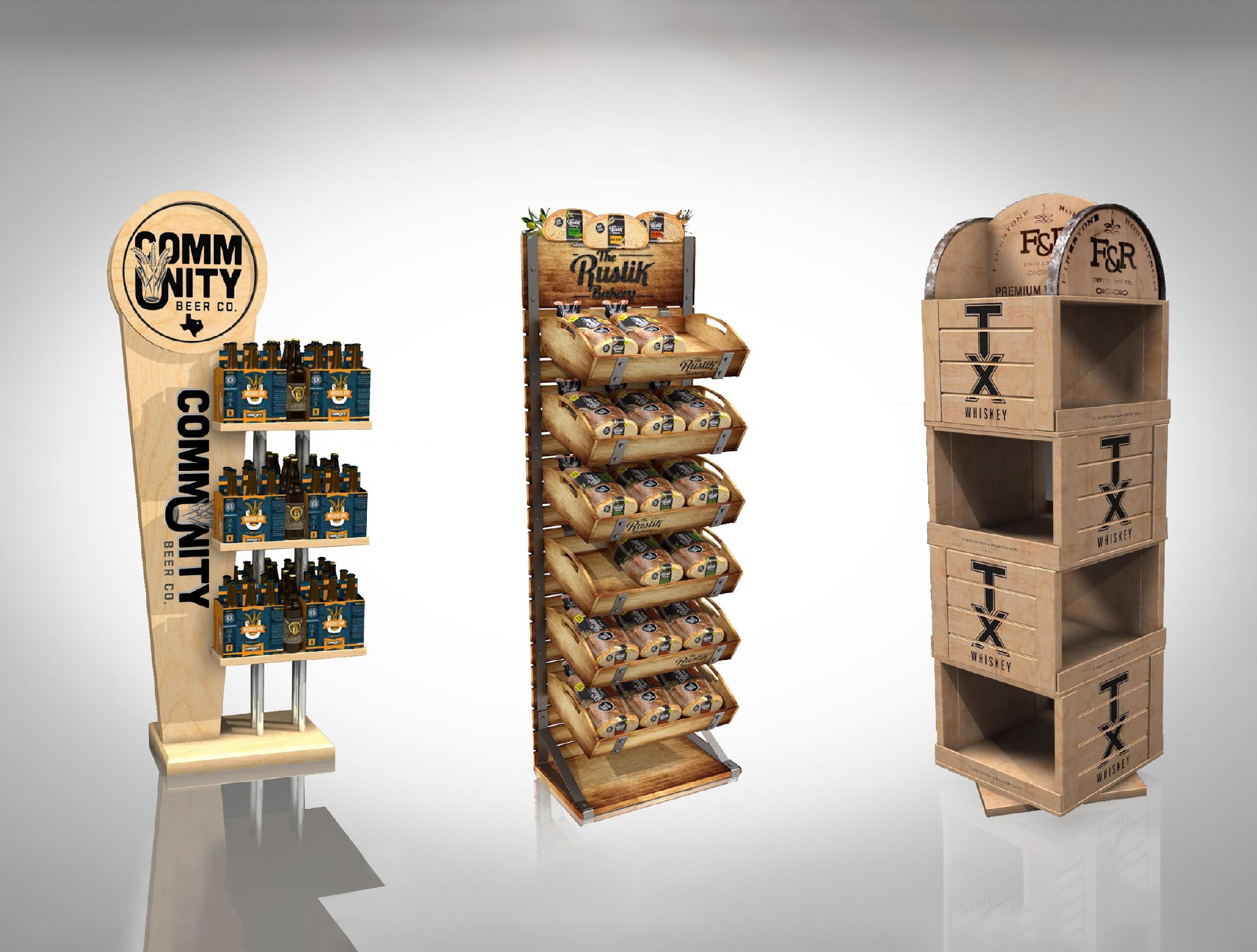
Beverage Display Design
When the brief is “win the shelf,” the design has to earn the look from across the aisle. We engineer retail displays for some of America’s most recognizable beverage and lifestyle brands.
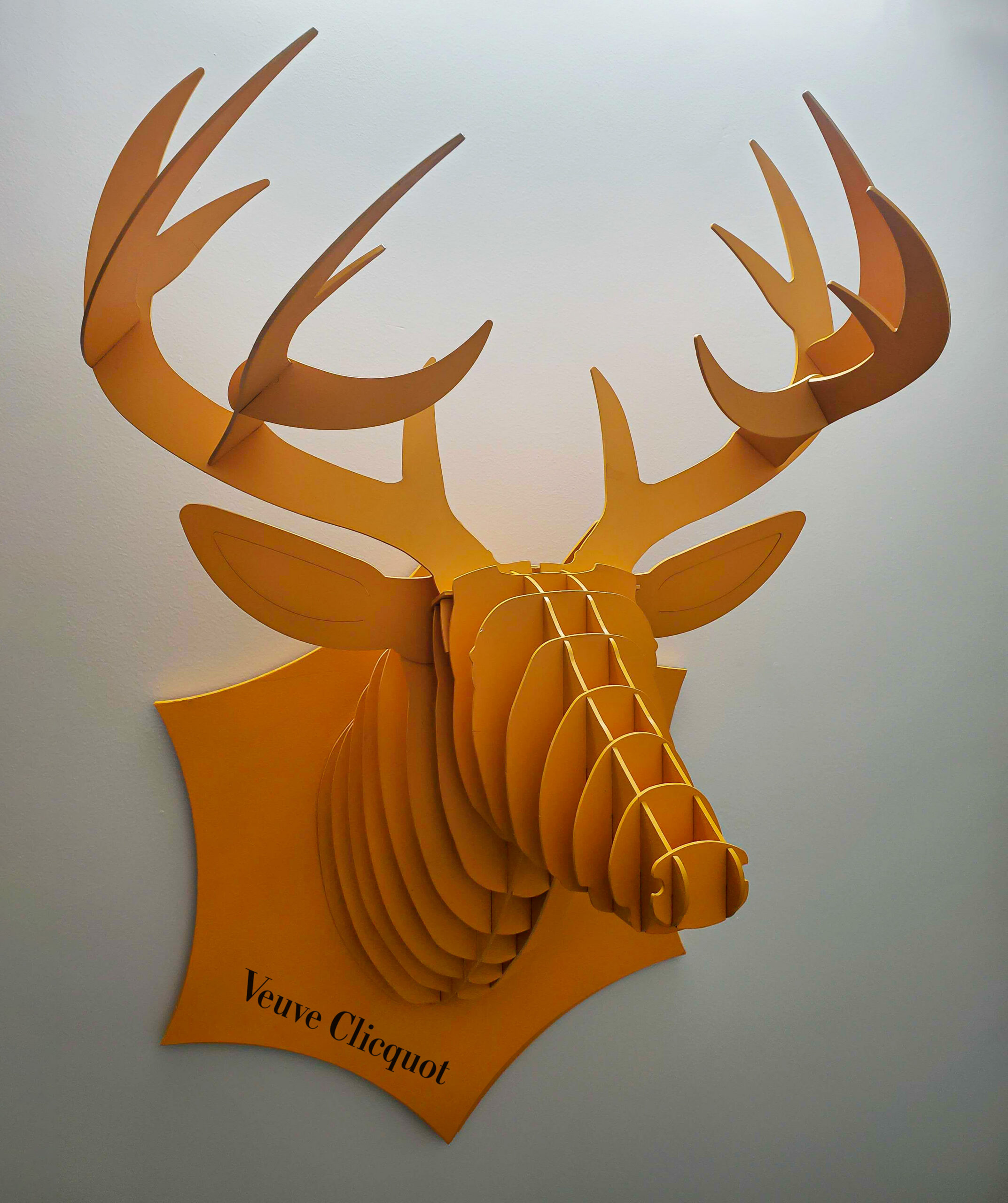
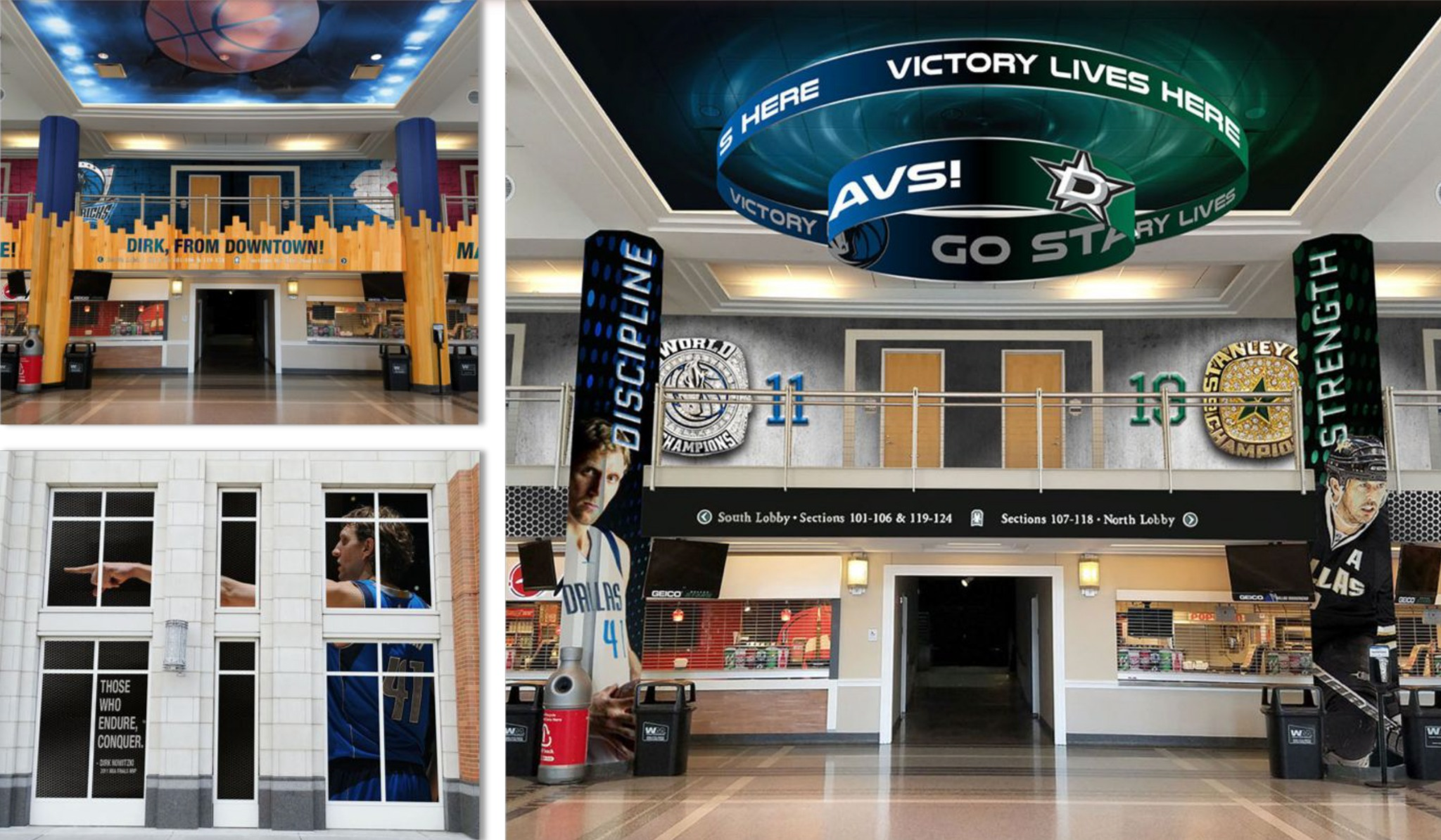
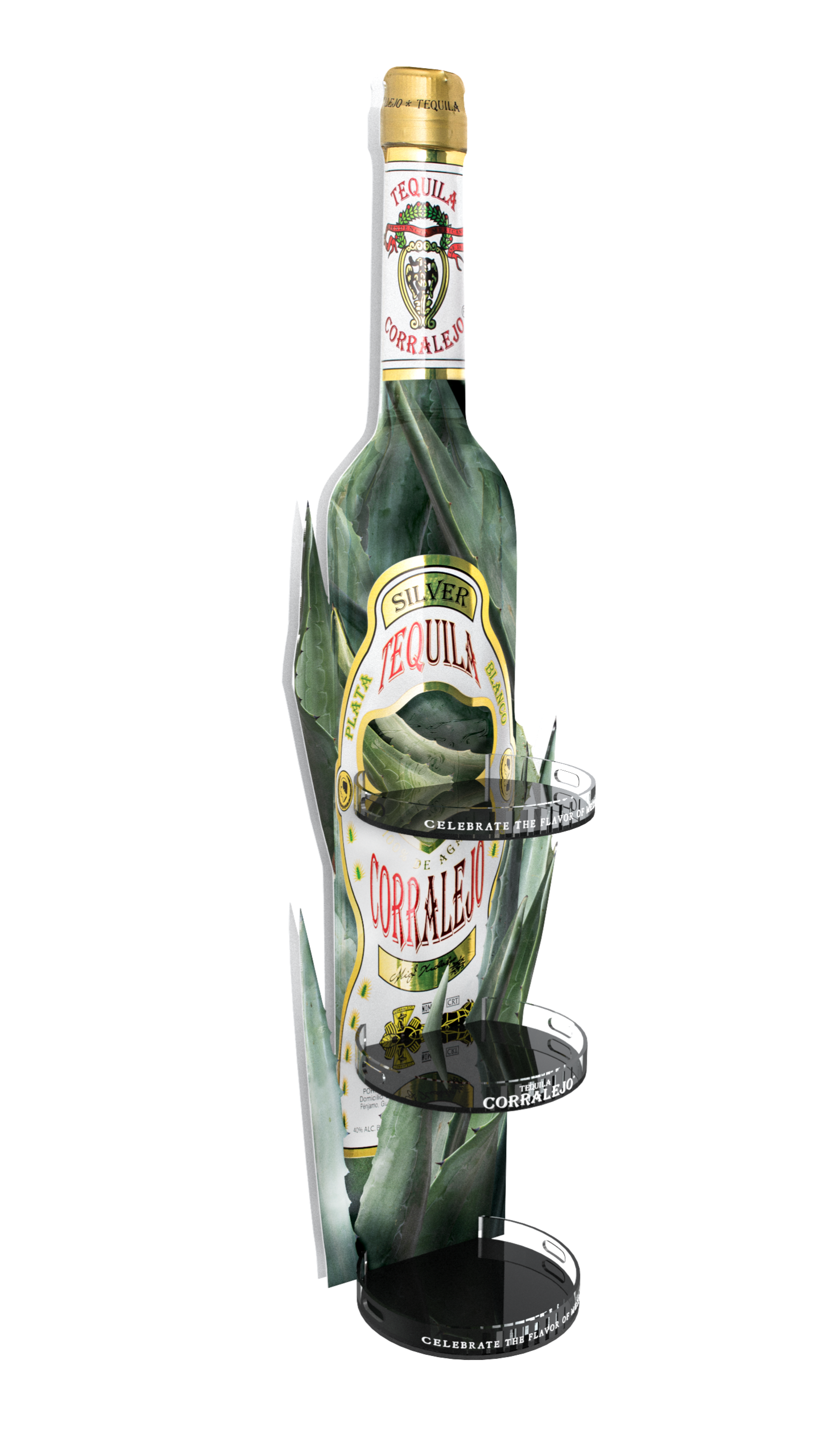
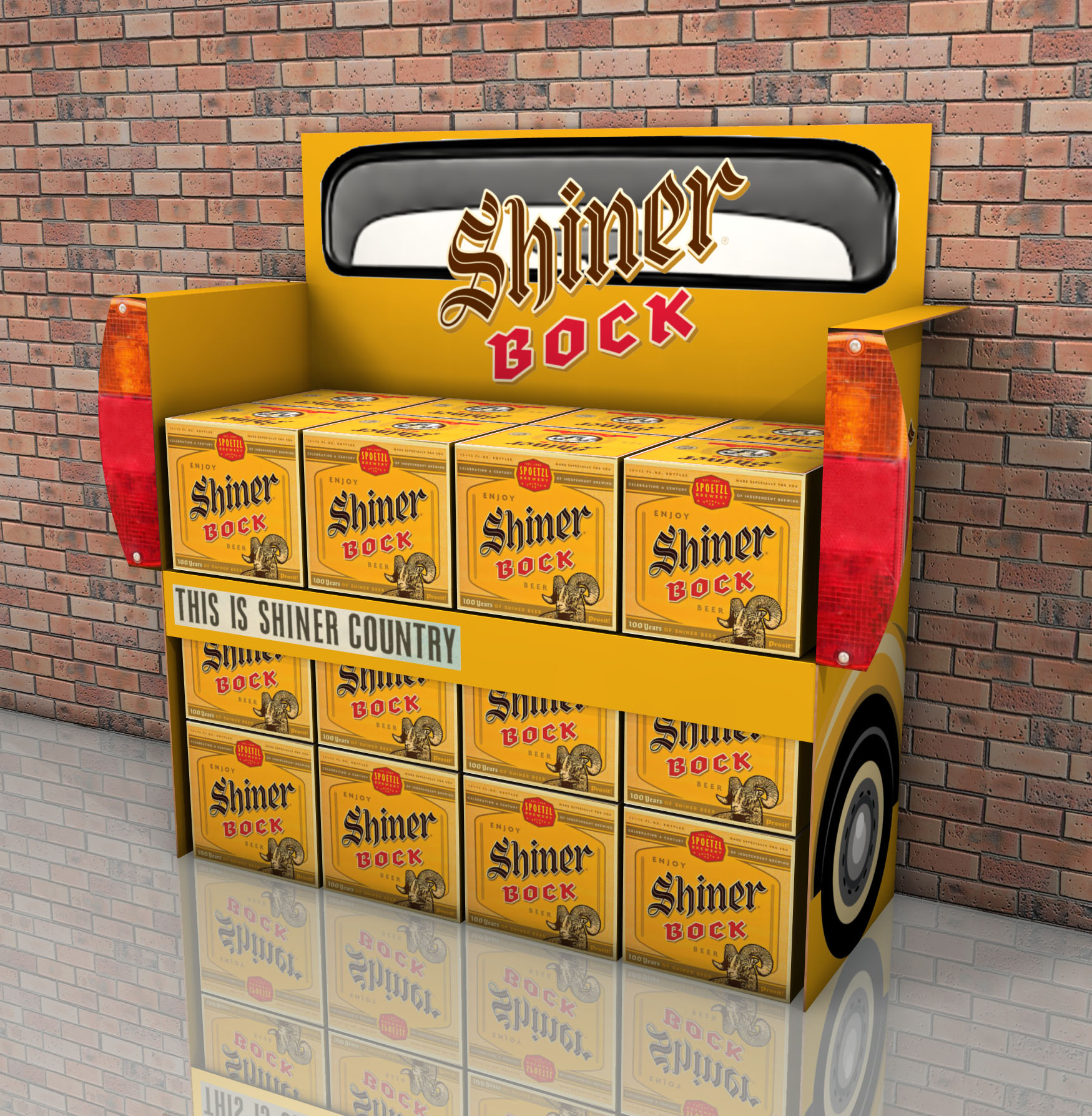
Every project starts with the brand’s iconography and ends with shop-floor reality. The Veuve Clicquot deer-head display, the Bishop Cider mass-display, the American Airlines wall wraps, the Shiner truck rig: each one is built to interrupt at retail and survive in production.
Our work spans concept sketches through production-ready CAD, with structural choices made for shelf-life, stack-ability, and brand integrity.
From sketch to shop floor. In three stops.
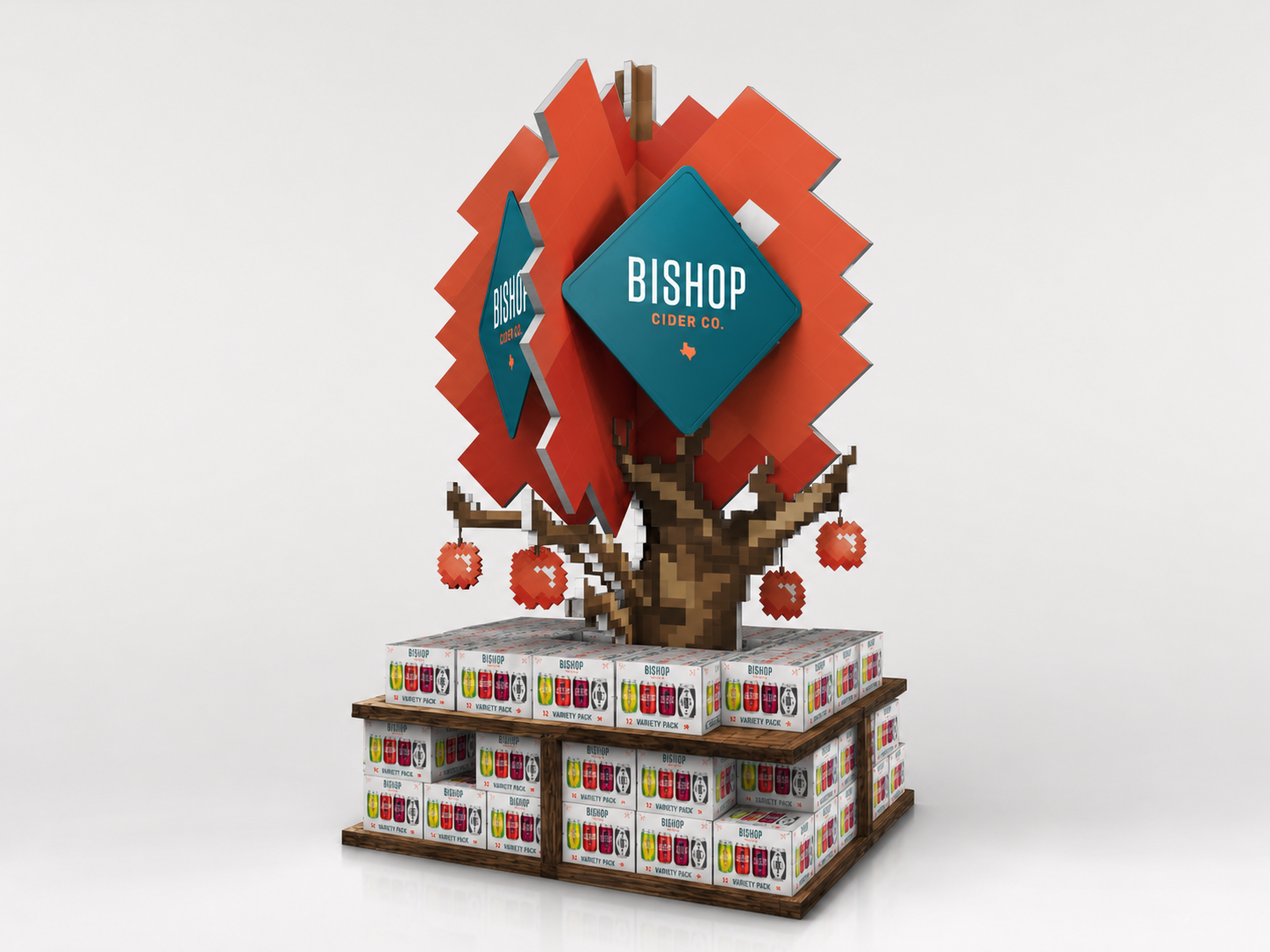
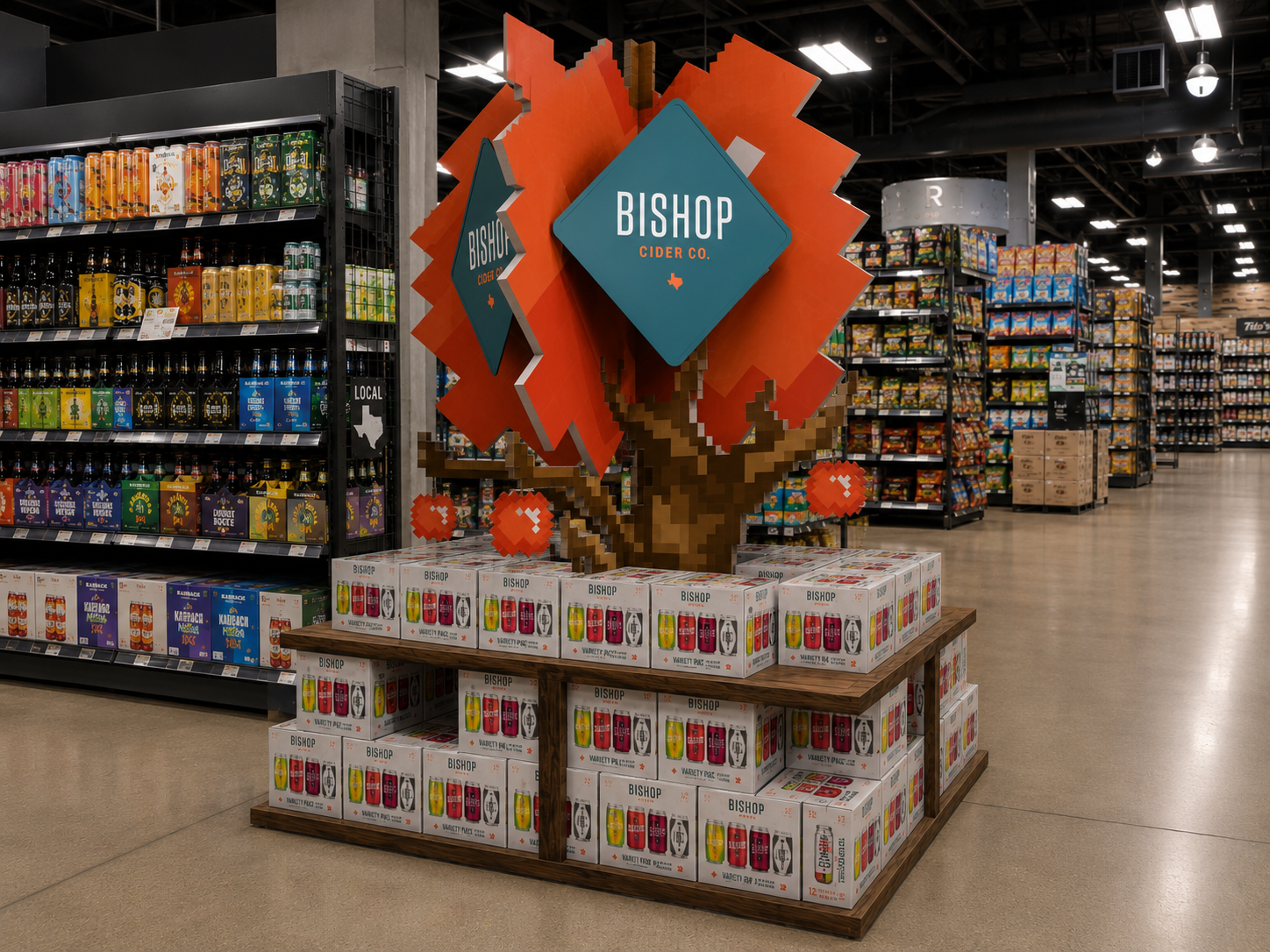
Click any stage to scrub through how one display gets built. The Bishop Cider mass display from rough concept sketch to engineered rendering to in-store retail reality. The case study is the process.
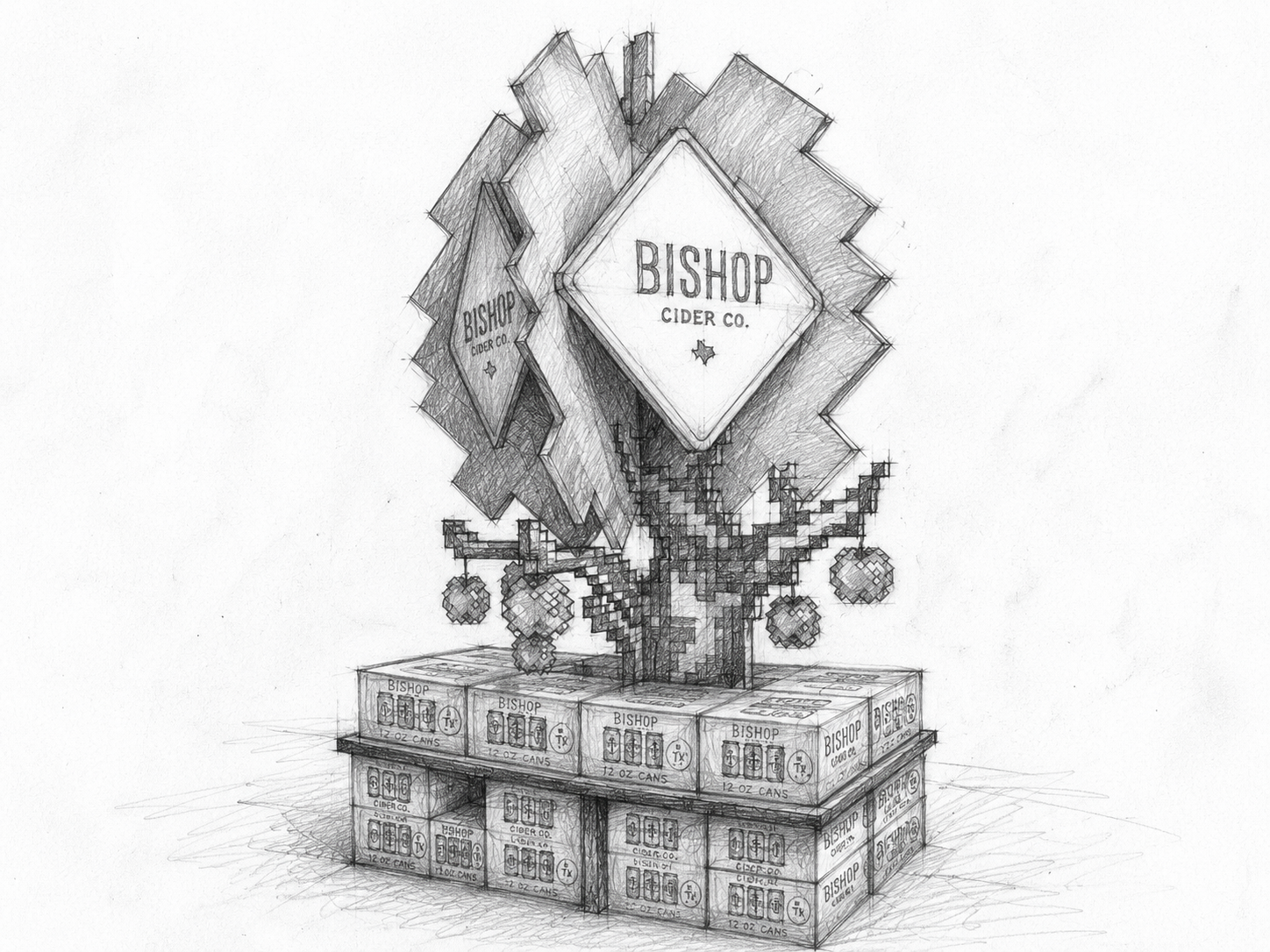
Concept.
Brand-led concept dev. Iconography decoded, theme set, retail context mapped. For Bishop Cider, that meant translating the craft-cider attitude into a mass floor stack operators could spot from the entrance. Hand sketches, mood boards, and shelf-context studies before a single CAD line gets drawn.
“What does the brand want to be remembered for from across the aisle?”
- Concept sketches
- Mood and material boards
- Shelf-context studies
- Brand workshop notes
- Approved direction
Structural Design.
CAD engineering for stack-ability, shelf life, and fabrication tolerances. The Bishop sketch becomes a 3D rendering with real dimensions, real materials, and a real palletization plan. The structure has to survive the warehouse, ship on a pallet, and assemble on a Tuesday afternoon by a stocker who has never seen the deck before.
“If a stocker cannot assemble it in twelve minutes, it does not ship.”
- 3D CAD models
- Technical drawings
- Materials specification
- Stack and ship calculations
- Fabricator-ready package
Production.
Print-ready files, fabricator-spec packets, palletized for national distribution. The Bishop Cider mass display arrives on the shop floor looking like the rendering, holding inventory the way the CAD modeled, and pulling shoppers the way the sketch promised. Three stages collapse into one shelf moment, co-built with Uncommon Brands.
“From across the aisle, it has to read in three seconds or less.”
- Print-ready production files
- Fabricator-spec packet
- Palletization plan
- Field-installation guide
- QC checklist
Brands we have engineered displays for.
From shelf interruption to production logic.
The examples are ordered by how retail display work actually moves. A signature object establishes the brand. Mass and environmental applications prove scale. Production systems show how the idea survives fabrication.